No Server? Your Desktop Is the Server

· 7 min read
Creator of UnDercontrol

Where your data lives is a fork in the road when you pick a tool. SaaS is the convenient path: sign up and go, nothing to maintain, at the cost of your data sitting on the provider's servers. UnDercontrol will offer that hosted option too. But if what you want is full data self-custody — tasks, notes, and ledgers stored only on your own devices, where backup means copying a file and migration means moving to another machine — this tutorial is for you.

Self-custody usually means running your own server, and that is exactly where most people give up. Here is a zero-cost path that skips the server entirely: the UnDercontrol desktop app ships with a full backend and keeps your data in a SQLite file on your own disk; Cloudflare Tunnel exposes that machine to the internet for free; the iOS app connects straight to your own endpoint. Check tasks, jot notes, and log expenses from the subway, while the data itself never lives anywhere but your computer. No public IP, no router port forwarding, and no domain to buy (optional, only if you want a fixed address).
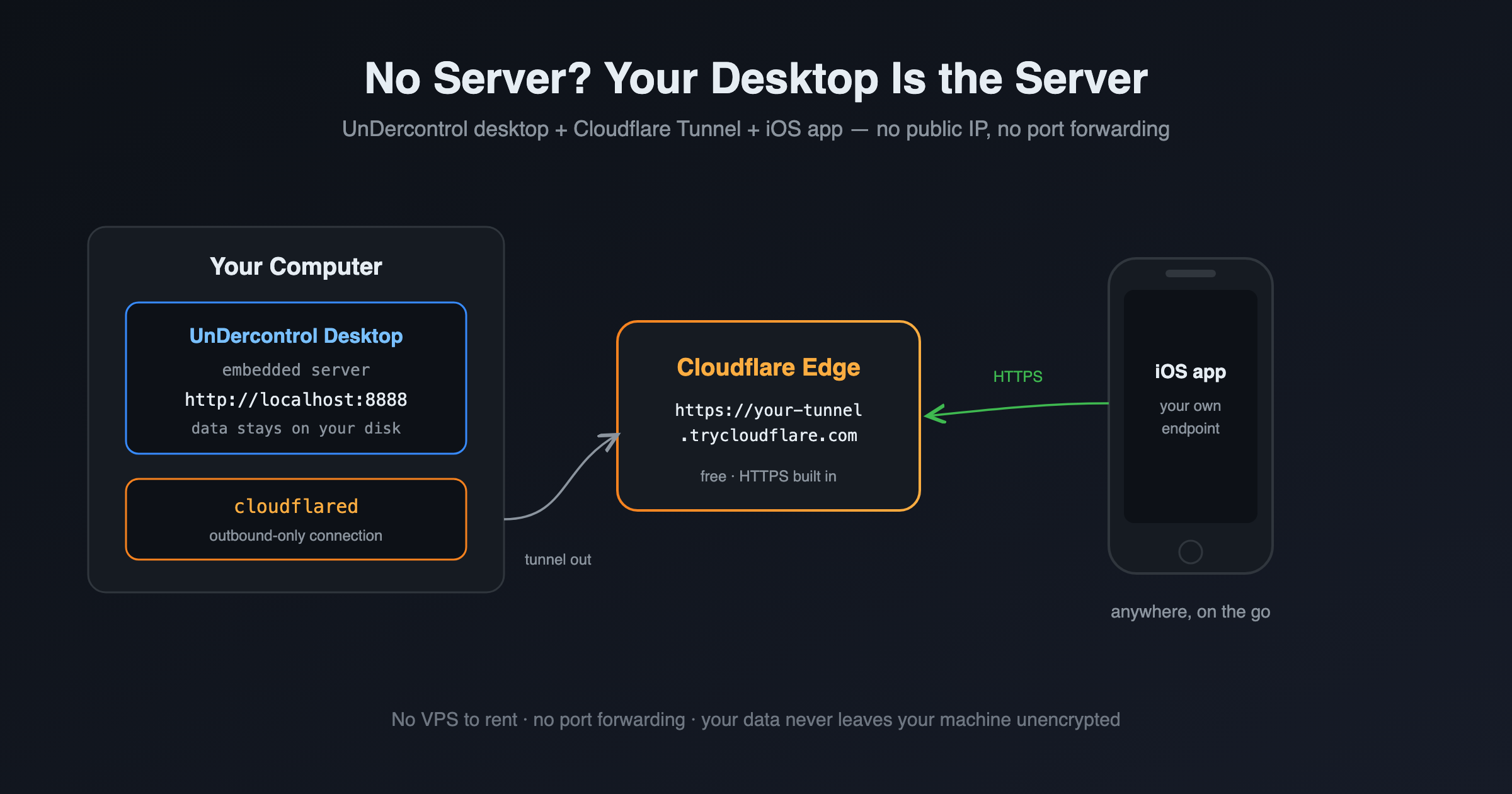
Architecture: the desktop app embeds a server, cloudflared dials out to Cloudflare's edge, and iOS reaches it over HTTPS from any network

Pin the Discussion to the Line It's About

· 4 min read
Creator of UnDercontrol

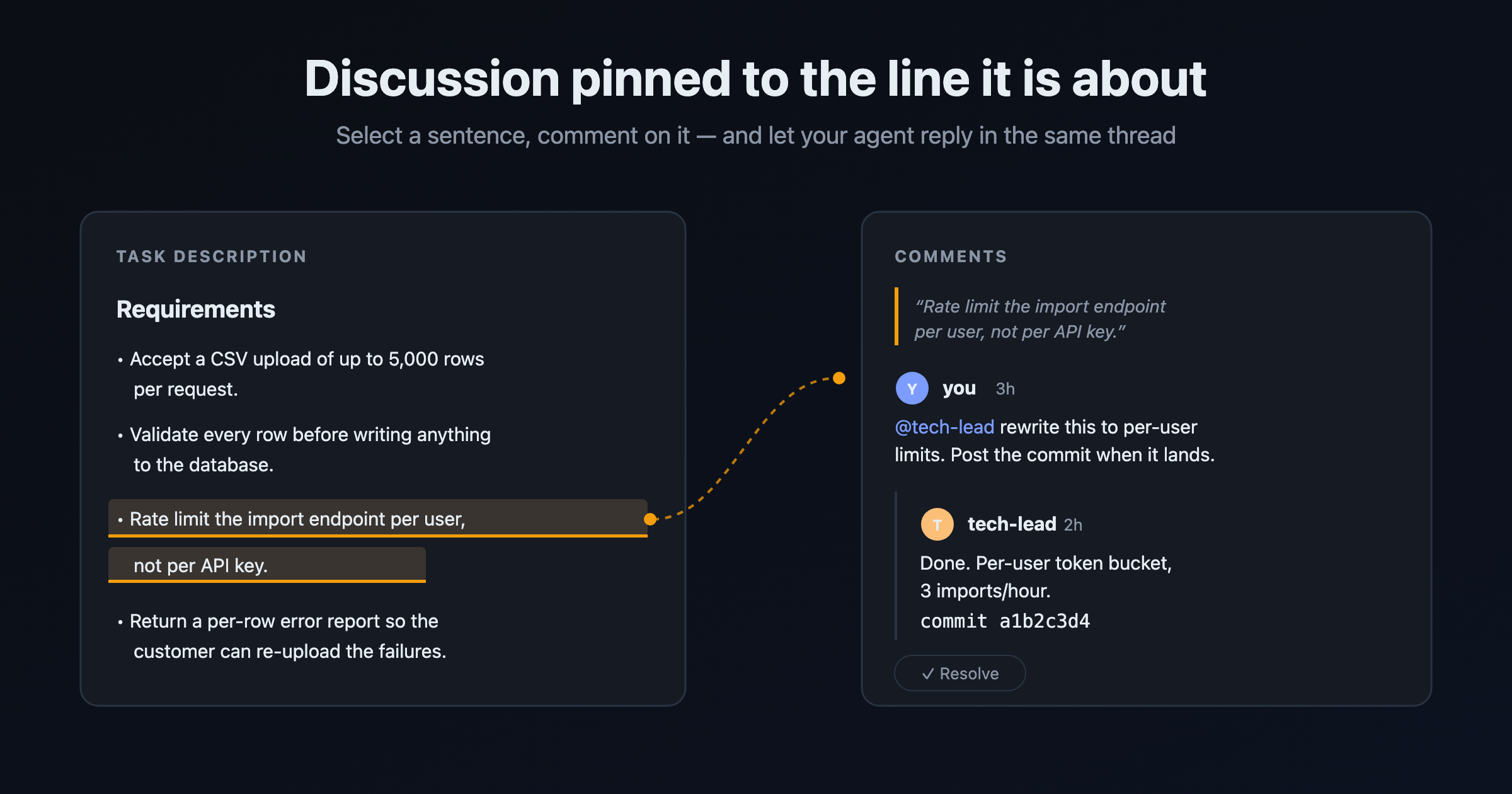
You send out a spec and the discussion immediately comes apart from it. Someone replies in Slack: "that field in the third section, is it nullable?" Now you scroll back to the doc, count down to the third section, and guess which field they meant. Read the same message a day later and the context is gone.

Anchored comments: discussion pinned to the line it is about

Turn a Task into a Parcel Locker

· 4 min read
Creator of UnDercontrol

The computer at a print shop isn't yours, and you're not going to log into anything on it. The usual ways to move a file there are all awkward: messaging apps want a QR scan and a login session, cloud-drive share pages nag you to install their app, and the USB stick is at home.

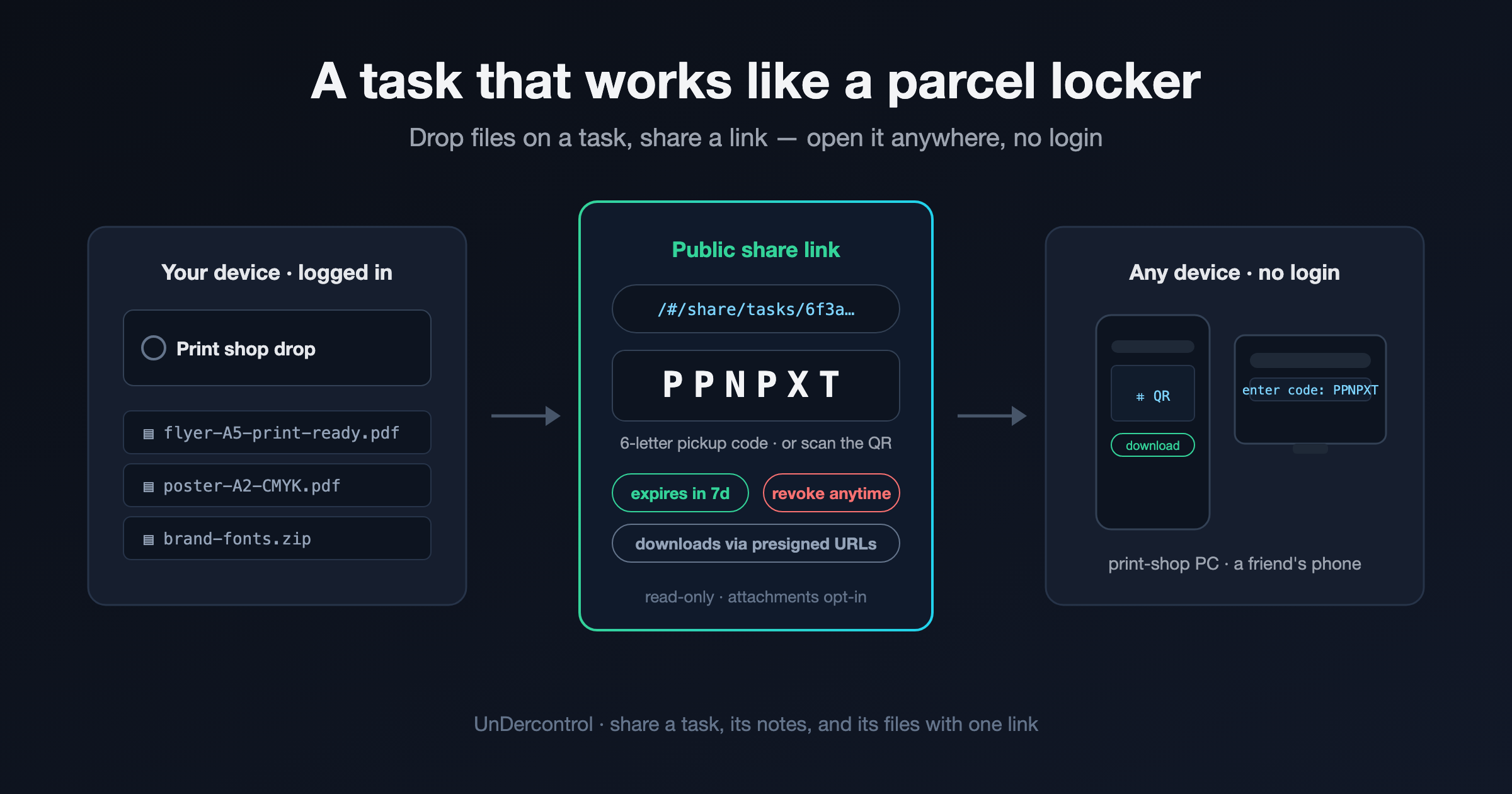
A task in UnDercontrol is already a container: body text, notes, and file attachments. Generate a public share link for it, and anyone who has the link can read the content and download the files. No account, nothing to install. It works like a parcel locker: you drop things in, get a pickup code, and whoever has the code takes them out.

Concept: a task working as a parcel locker

Agents of Agents: When AI Learns to Lead a Team

· 6 min read
Creator of UnDercontrol

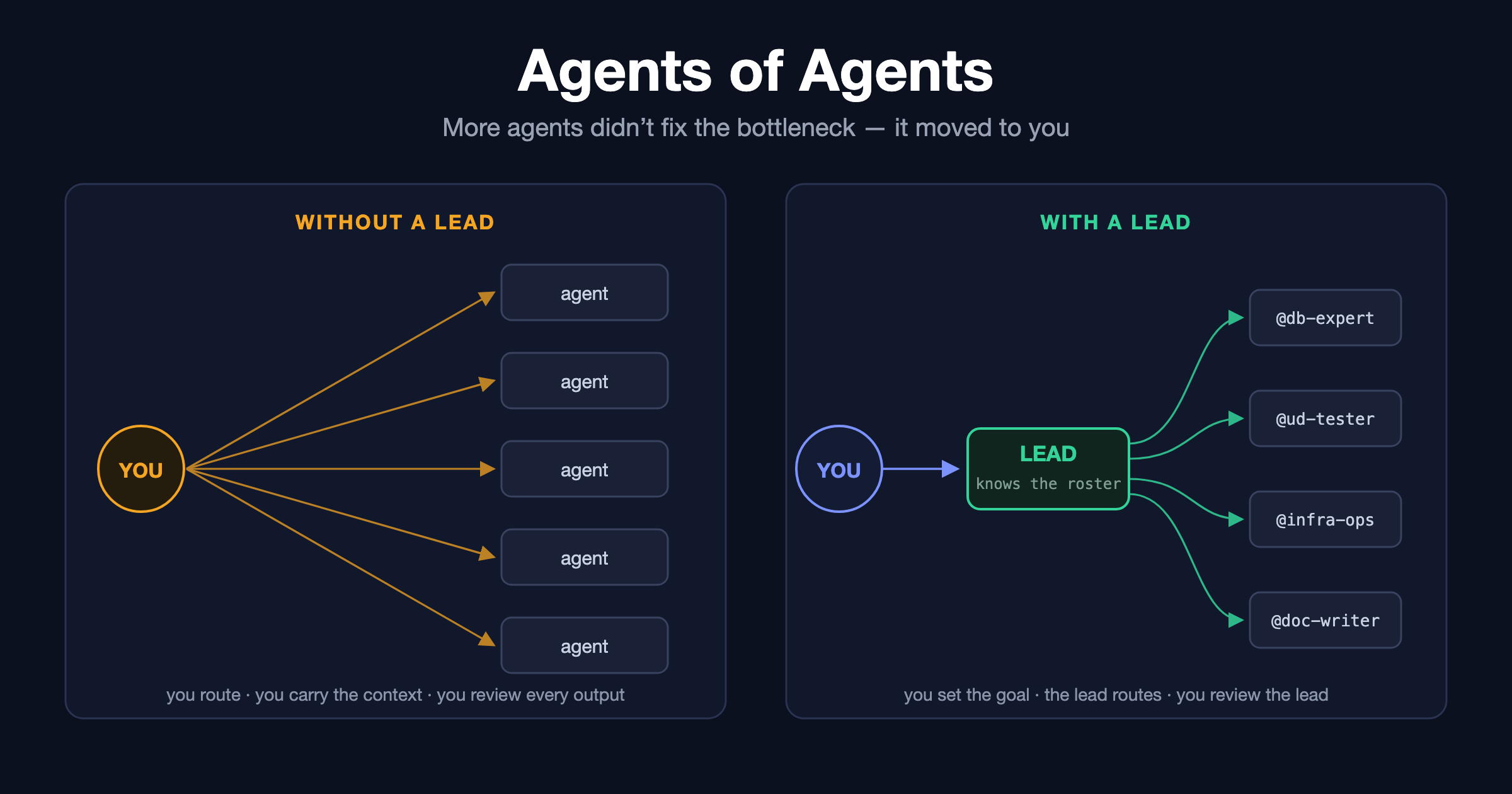
You set up three agents expecting three times the output. Instead your day looks like this: copy A's conclusion over to B, remember to chase C, read three sets of output at once, and hold "who is doing what" in your head.

More agents didn't fix the bottleneck — it moved. You no longer lack workers. You lack managers, because there's exactly one: you.

That's not a configuration problem, it's an org-structure problem. One person directly managing ten reports doesn't work in human companies either, and the fix was never "hire stronger individuals." The fix is a layer of management.

One human routing N agents versus a lead that routes for you

Claude Plans, Codex Executes

· 5 min read
Creator of UnDercontrol

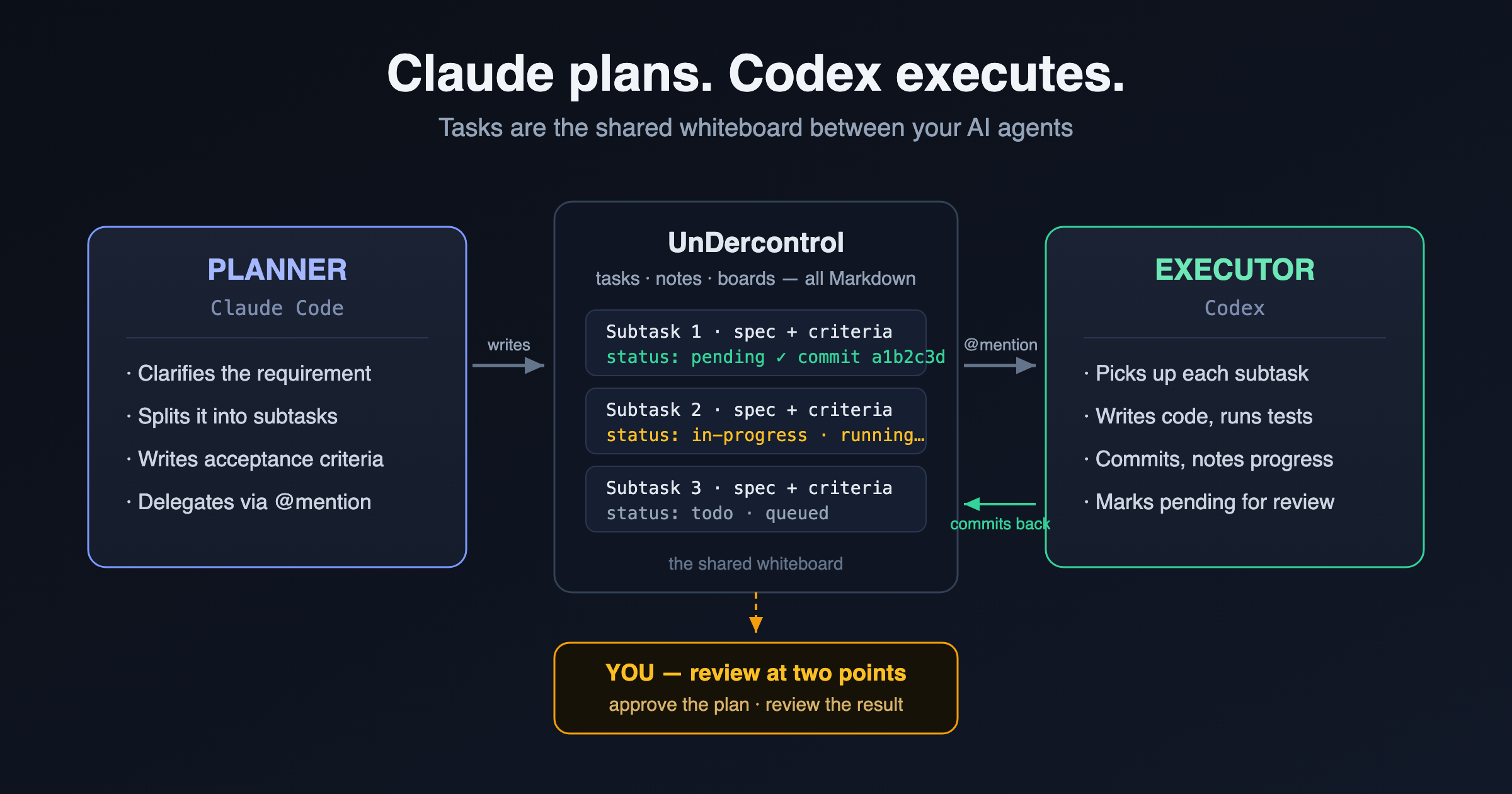
Plenty of developers already work this way: hash out the approach in Claude Code, then copy the conclusion into Codex to implement. The reason is practical, too — you're paying for both subscriptions anyway. Claude is great at planning; letting Codex do the heavy lifting doesn't burn your Claude quota. Both subscriptions earn their keep. The only problem: the "copy-paste" role in the middle is you.

In UnDercontrol, this pipeline works out of the box: Claude plans, Codex executes, and the task system is the whiteboard they share — you only step in to review at the key points.

Claude plans, Codex executes — tasks are the shared whiteboard between your AI agents

Virtual Path: Where Tasks Settle into Knowledge and Docs

· 6 min read
Creator of UnDercontrol

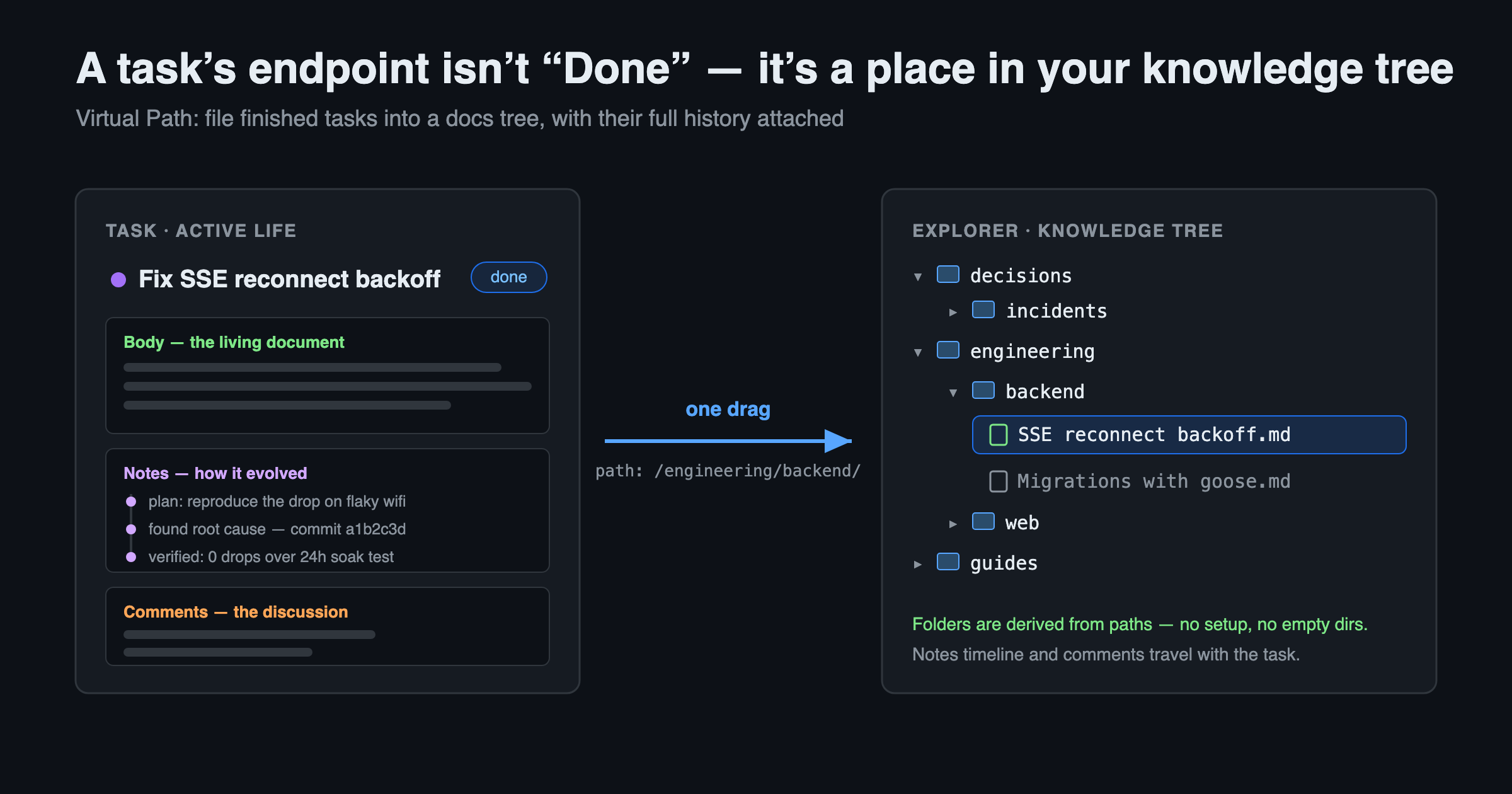
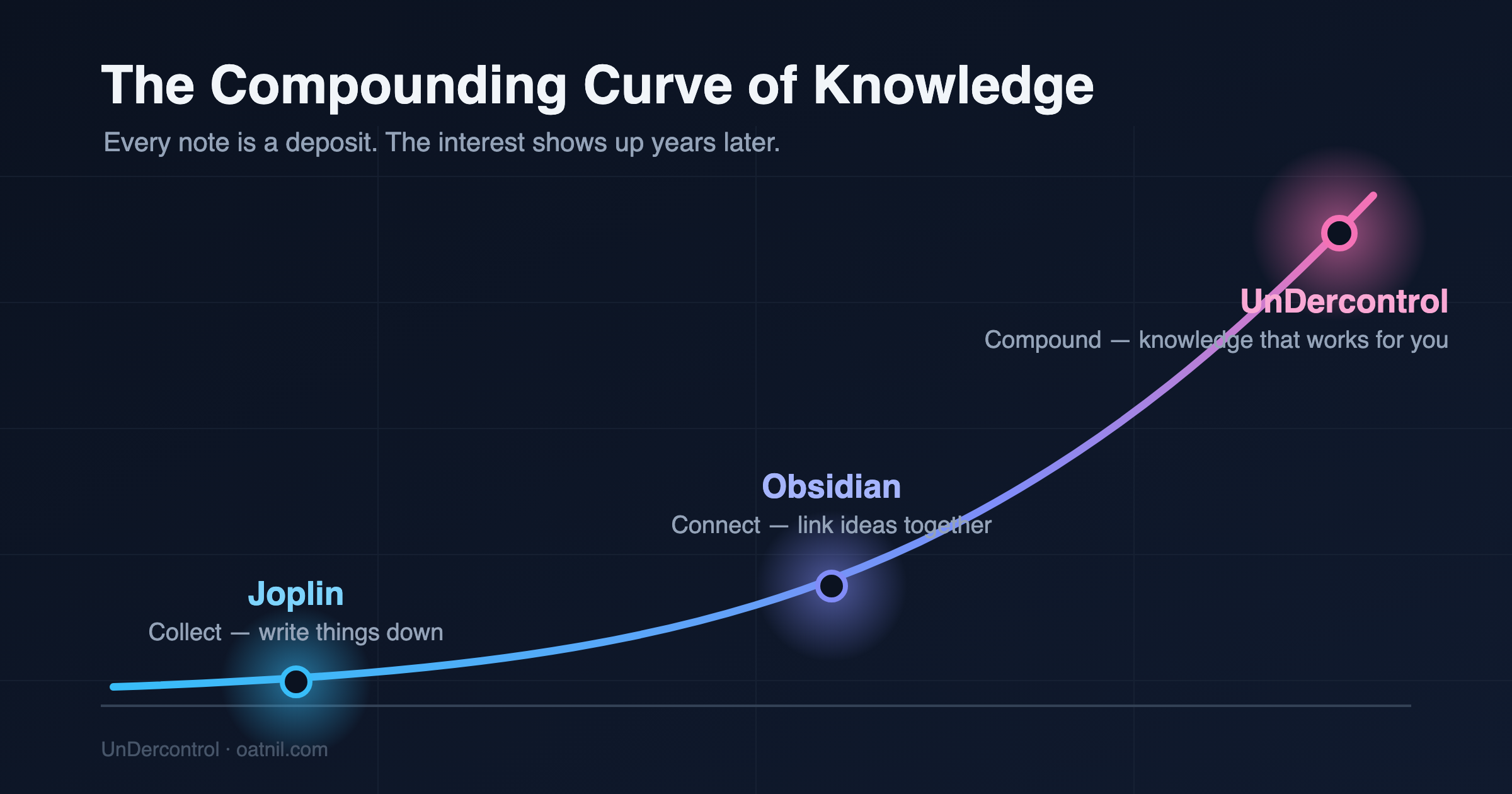
I've watched too many tasks die the moment they hit "Done." The card gets archived and nobody ever opens it again — why we designed it that way, what pitfalls we hit, how it was verified, all buried inside. Two months later someone asks, and you retell it from memory.

Building UnDercontrol, I've held onto one conviction: a task shouldn't be disposable. Its body is already a Markdown document, its Notes record how it evolved step by step, and the comments keep the arguments from back then. Throwing all of that away when the work is done is just wasteful.

That's why Virtual Path exists.

A task's endpoint isn't Done — it's a place in your knowledge tree

Why Your Board Won't Show What You Actually Care About

· 11 min read
Creator of UnDercontrol

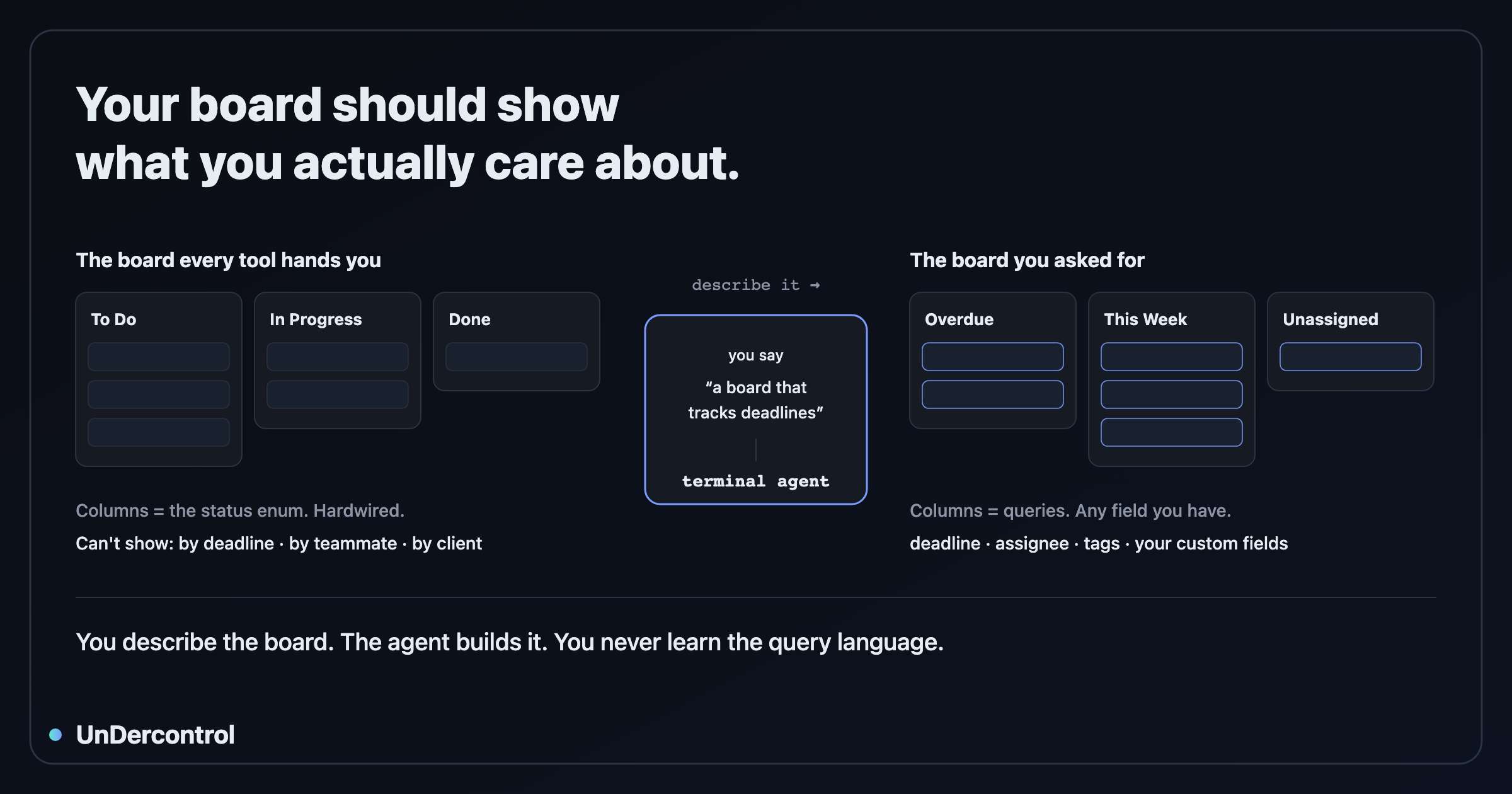
Monday morning, you open the board. What you want to know is what's about to blow up: what's already overdue, what's due this week. The board only tells you what's In Progress.

There's a lot it won't show you. You want to see work by client, by sprint, by document type — there's no option for that. You want to pull the unassigned tasks into their own column — also no. You want one column watching overdue items, one watching this week's urgent ones, one just holding whatever was touched most recently, all mixed together — can't do it. The only things you can really change are the column names and their order.

So the board shows you the tool's idea of your work, not yours. The dimensions you care about, it can't hold a single one.

On the left, the three-column board every tool hands you, which can't hold the dimensions you care about; on the right, the board you described in one sentence and an agent built to fit

AI Doesn't Just Work Inside UnDercontrol — It Runs UnDercontrol Itself

· 5 min read
Creator of UnDercontrol

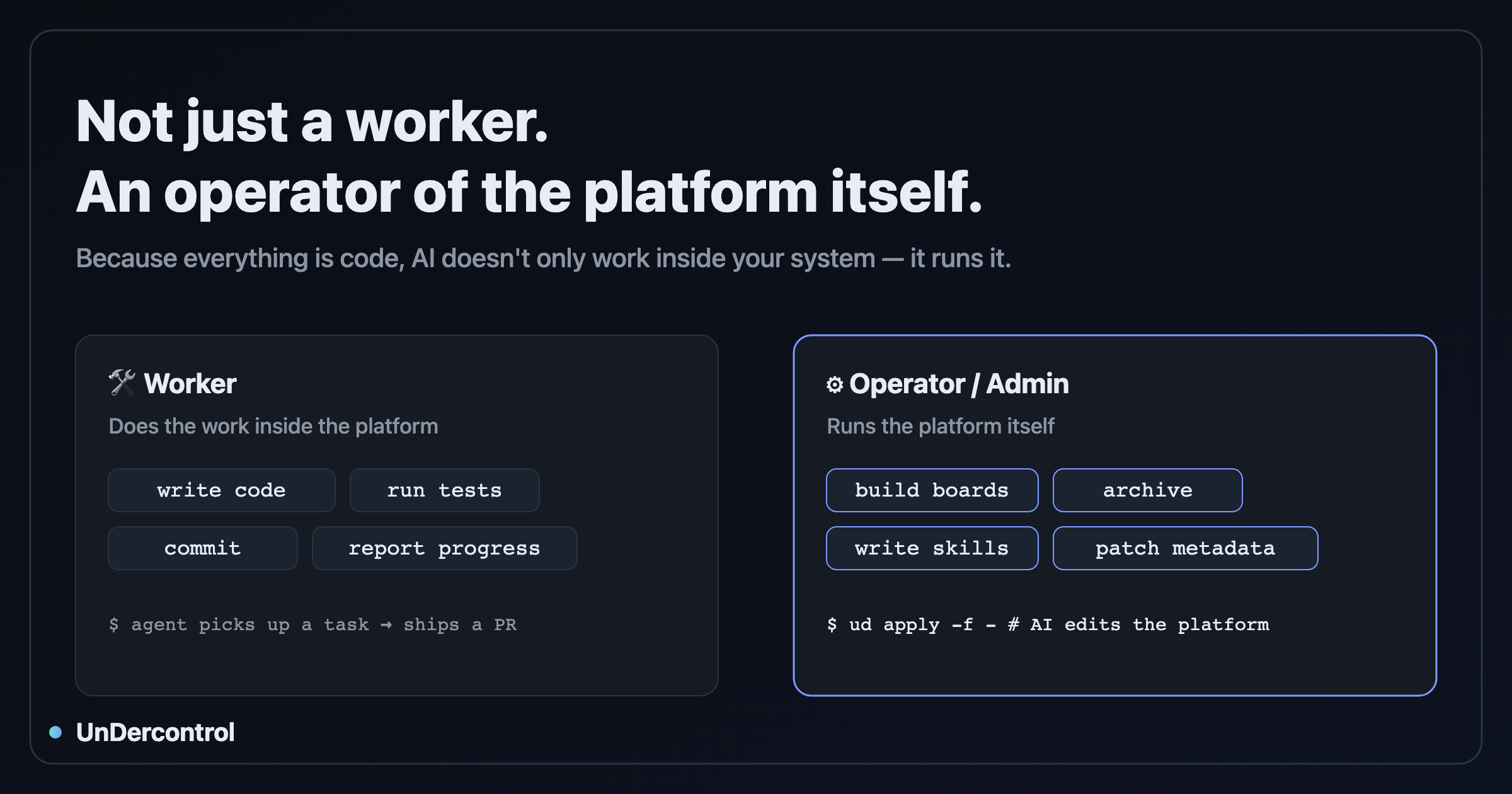
The "agent workbench" idea is heating up. More and more people agree: an AI agent should act like a teammate — pick up tasks, report progress, leave durable output — not just answer questions in a chat box.

But there's a further question that rarely gets asked: can the AI operate the platform itself? Not just do work inside the system, but run it for you — tidy up boards, archive stale tasks, maintain tags, distill hard-won steps into a reusable capability.

Not just a worker — an operator of the platform itself

One Board, the Whole Project in View — A Week with Kanban

· 6 min read
Creator of UnDercontrol

Monday, 9 a.m. You open UnDercontrol, glance at one board, and already know where this week starts.

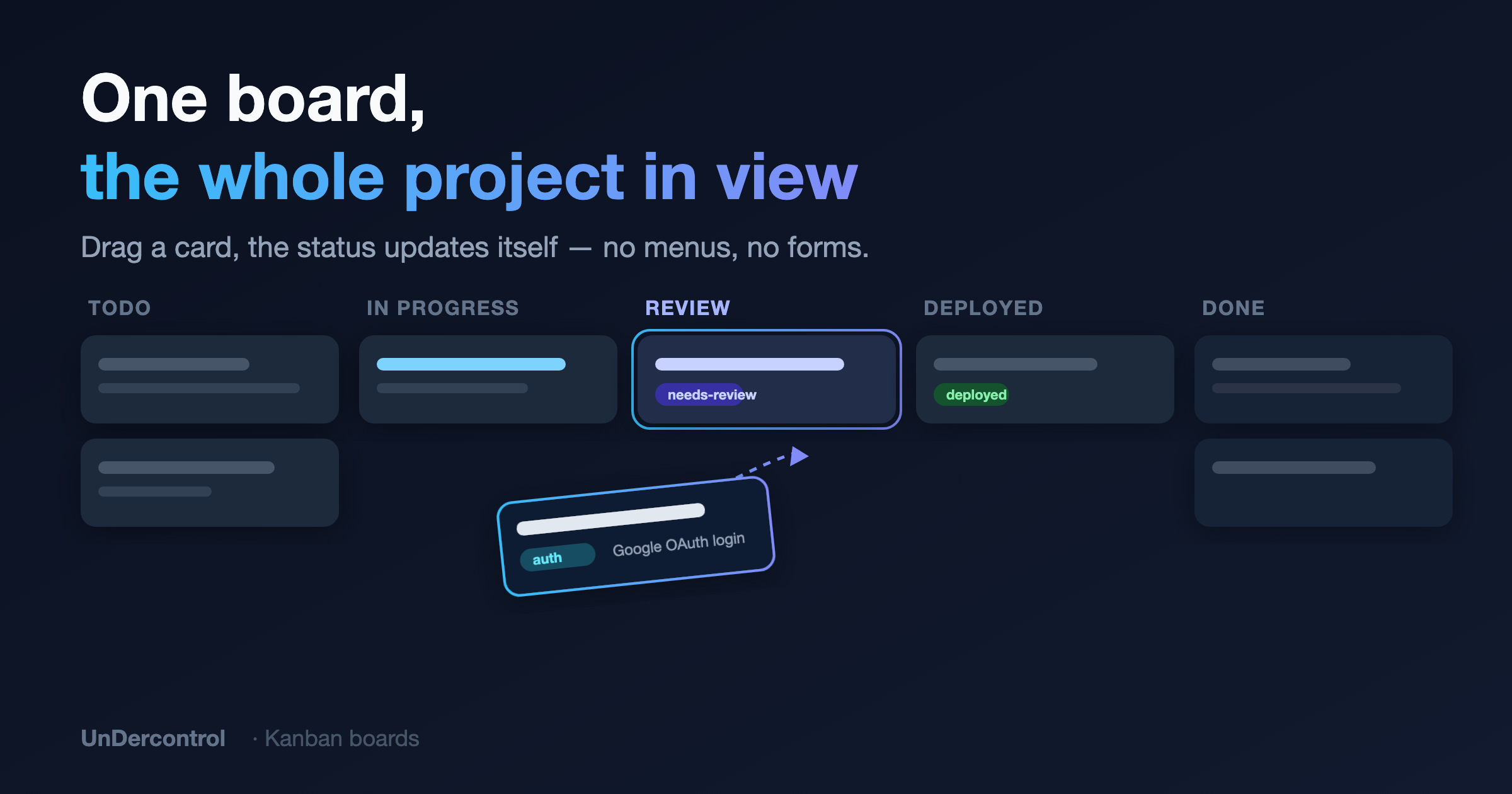
This is your side project MorningRun — a running social app, currently in Sprint 12. Five columns line up across the board: Todo, In Progress, Review, Deployed, Done. What hasn't started, what's stuck, what's waiting on someone else — you can see it all without opening a single task. Let's walk through a whole week with this one board.

One board, the whole project in view — drag a card, the status updates itself